Structural drying in Cary, NC
Getting the standing water out is only the start. Water soaked into drywall, framing, subfloor and cabinets has to be evaporated, pulled out of the air and measured until the house is back to its normal dryness.
- Drying plan based on moisture mapping
- High-velocity air movers and LGR dehumidifiers
- Wall cavity and under-cabinet drying
- Hardwood floor drying mats
- Daily readings until materials reach a dry standard
Covering Cary · Apex · Holly Springs · Morrisville · Raleigh
Request structural drying
Moisture mapped, not guessed
Moisture meters and thermal imaging trace how far the water traveled, so drying and tear-out stop where the damage stops.
Mold sealed off first
Moldy areas are closed in with plastic and kept under negative air with HEPA filters, so spores stay out of the rest of the house.
Paperwork insurers expect
Photos, daily moisture logs and an itemized estimate, so a claim has the documentation adjusters ask for.
Why choose us
Dry, clean and documented
A leak becomes a mold problem when the house is not dried in time. Quick extraction, measured drying and proper containment keep one bad day from turning into months of repairs.
- Fast response to active leaks
- Moisture readings every visit
- Containment and HEPA filtration
- Photos and logs for insurance
- Written, itemized estimates
- Local to Cary
How drying works
Wet materials dry when the water in them evaporates and that water vapor is removed before it can soak into something else. Three things control the speed: moving air across wet surfaces, dry air to absorb the moisture, and warmth. Restoration equipment manages all three on purpose.
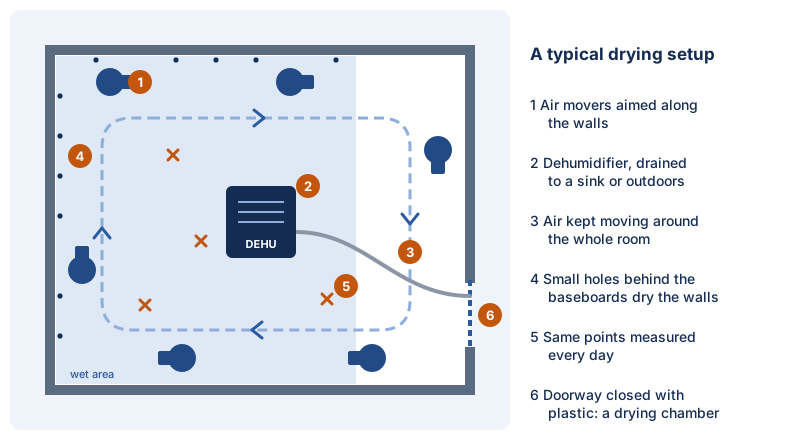
Air movers alone are not enough. Blowing air across a wet room without dehumidification simply raises the humidity, and the moisture settles into furniture, drywall in the next room and anything else that is dry. Balanced drying pairs air movers with enough dehumidification to keep the air dry, inside a closed-off drying chamber.
The equipment
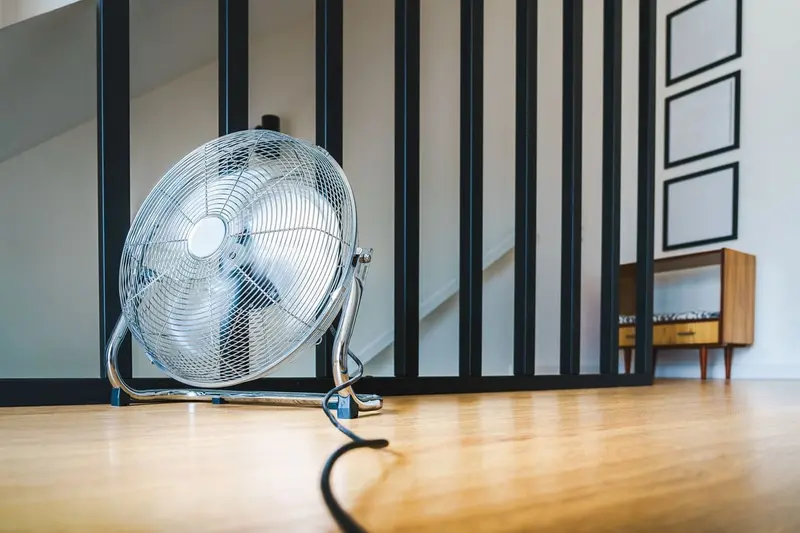
- Air movers are high-velocity fans that sit low and blow a sheet of air across floors and up walls. A common rule of thumb is roughly one for every 10 to 16 feet of wet wall, adjusted for the room.
- Low grain refrigerant (LGR) dehumidifiers can pull the air much drier than a household unit, which speeds evaporation from dense materials.
- Desiccant dehumidifiers dry the air with a moisture-absorbing wheel instead of cold coils, so they keep working in cool conditions and on specialty jobs.
- Wall cavity systems push dry air through small holes into the space inside the wall.
- Floor drying mats seal to hardwood and draw moisture up through the boards under suction.
- Air scrubbers with HEPA filters run alongside when there is any mold or contamination.
Drying walls without tearing them out
Drywall that got wet with clean water, is still firm and was reached quickly can usually be dried in place. The baseboards come off, small holes are drilled at the bottom of the wall behind where the trim sits, and dry air is directed into the cavity. Walls are opened instead when the drywall is sagging or crumbling, when the water was contaminated, when the insulation inside is soaked, or when a vinyl wallcovering or several coats of oil paint would trap the moisture. A flood cut, a straight cut a set height above the floor, is quicker to repair than ragged holes.
Hardwood floors, subfloors and cabinets
Wet hardwood cups as the bottom of each board swells more than the top. Drying mats and patience usually bring it back flatter than people expect, and it often needs several weeks to settle before anyone decides whether to sand, refinish or replace it. Sanding a cupped floor too early is how floors end up crowned once they finish drying. Under cabinets, the toe kicks are removed and air is directed into the space beneath. Particleboard that has already swollen does not shrink back, and is part of the repair rather than the drying. The warped floors page covers floor damage in more depth.
Daily monitoring and the dry standard
Drying is measured, not assumed. On each visit, readings are taken at the same marked points and recorded, along with the temperature and humidity inside and outside the drying chamber. Equipment is moved or added where readings are not dropping. Drying ends when wet materials match the dry standard, meaning the readings from the same material in an unaffected part of the house, and the final numbers become part of the record for your insurer.
Drying in a humid climate
Triangle summers work against drying. Outdoor air from May through September often carries more moisture than the drying chamber should, so windows stay closed and the dehumidifiers do the work. Opening the house to “air it out” on a muggy day usually adds water rather than removing it. In winter the heating system helps, as warm indoor air holds more moisture and carries it to the dehumidifiers.
What happens after drying
When the readings confirm the structure is dry, the equipment comes out and water damage repair can start. If any mold was found while the walls were open, it is handled through mold remediation before anything is closed up. Drying is usually billed by the day for each piece of equipment, which is one reason prompt extraction saves money; the water damage cost guide explains the rest.
Structural drying — common questions
How long does it take to dry a house after water damage?
Typically three to five days for drywall, framing and subfloor after a leak, if the water was extracted promptly. Hardwood floors, plaster, concrete and saturated cabinets can take a week or more.
Can drying equipment be turned off at night?
It should not be. Drying is a continuous process, and switching equipment off lets humidity climb back up and slows everything down. Most households get used to the noise for the few days it runs.
Why are holes drilled in my walls?
Small holes near the floor, usually hidden behind the baseboards, let dry air be pushed into the wall cavity so it can dry without removing the drywall. They are patched afterward.
How do you know the house is dry?
Moisture readings in the wet materials are compared with readings from unaffected areas of the same house, known as the dry standard. When they match, drying is done, and the readings go in the file.
Problems this fixes
Often booked with this