Water heater leaking: what to do and what it damages
A tank water heater holds 40 to 80 gallons and refills as fast as it drains, so a failure in an attic, closet or garage can soak a lot of house quickly. Shut it off, then find out where the water went.
What you may notice
- Water pooling around the base of the tank
- Rust or corrosion on the tank or its fittings
- Water dripping from the relief valve pipe
- Damp drywall or flooring beside a closet heater
- A ceiling stain below an attic water heater
Tell us what you are seeing
Moisture mapped, not guessed
Moisture meters and thermal imaging trace how far the water traveled, so drying and tear-out stop where the damage stops.
Mold sealed off first
Moldy areas are closed in with plastic and kept under negative air with HEPA filters, so spores stay out of the rest of the house.
Paperwork insurers expect
Photos, daily moisture logs and an itemized estimate, so a claim has the documentation adjusters ask for.
Shut it down safely
- Close the cold water supply on the pipe entering the top of the tank. That stops the tank from refilling.
- Cut the energy. For an electric heater, switch off its breaker. For gas, turn the control knob to off or pilot.
- Close the main shutoff if water is still flowing from somewhere you cannot isolate.
- Keep clear of hot water. The tank and the water around it can be scalding for hours.
- Photograph the heater, its label and the damage before anything is moved. The label shows the age.
A plumber can drain the tank through its drain valve into a floor drain or outdoors, which ends the leak for good.
Where the leak is coming from
- The bottom of the tank: the steel tank has rusted through inside. It cannot be repaired.
- The pipe connections on top: loose or corroded fittings, often fixable.
- The drain valve near the bottom: a dripping valve can be tightened, capped or replaced.
- The temperature and pressure relief valve, or the pipe running from it: the valve is opening because of excess heat or pressure, or it has failed.
- An expansion tank on the supply line, if the house has one.
A little water under a gas heater just after it was installed or refilled can be condensation, which stops as the tank warms. Steady water is a leak.
Closets, garages and attics
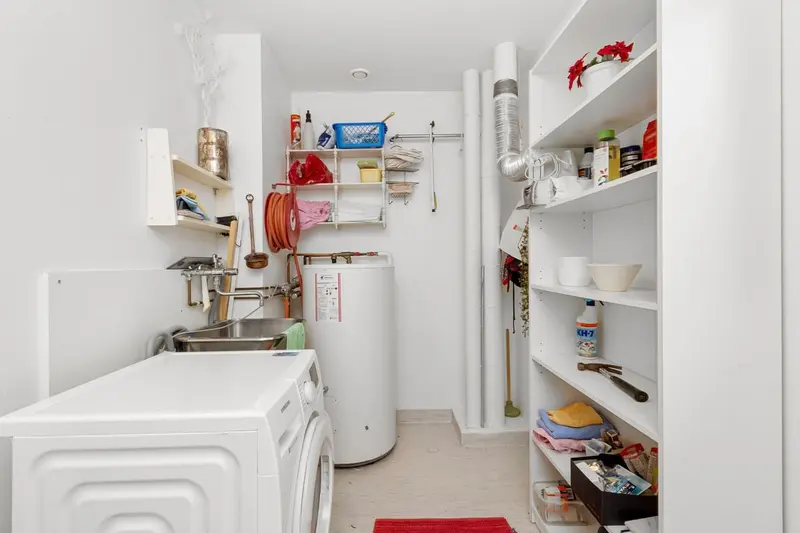
Where the heater sits decides how much damage a failure causes. In many Triangle houses it is in the garage, where a leak mostly reaches the slab, the drywall at the bottom of the walls and whatever is stored nearby. In townhomes and condos, it is often in an interior closet, so water spreads under the flooring into the hallway and adjoining rooms, and sometimes into the unit below. In some houses it is in the attic, directly over finished ceilings.
Code calls for a drain pan with a drain line under water heaters installed where a leak would cause damage, such as an attic or a closet over a finished floor. The pan only helps if its drain runs somewhere safe and is not blocked; a pan with no drain just delays the overflow. A leak sensor or an automatic shutoff valve adds a second line of defense.
What a tank failure damages
- The closet floor and the subfloor under it, which soak up water quickly.
- The bottom of the walls on both sides of the closet.
- Flooring in the hallway and nearby rooms, especially laminate and hardwood.
- The ceiling, insulation and framing below an attic or second-floor heater.
- Boxes, tools and stored belongings in a garage.
Because a heater keeps refilling until someone closes the valve, the water can keep coming for hours, which is how a closet leak reaches three rooms.
Drying after a water heater leak
Standing water is extracted first, the baseboards come off, and moisture readings trace how far it spread. The closet walls are dried in place where possible, with air directed into the wall cavities, and the subfloor under the heater gets particular attention because it is often the wettest spot and the hardest to reach. Flooring that traps water, such as vinyl plank or laminate, is lifted so the subfloor can dry. Structural drying explains the setup.
Replacing the heater and preventing the next leak
A tank more than about ten years old that starts leaking from the tank is usually replaced rather than repaired. Ask the plumber about a pan with a working drain, a leak sensor or automatic shutoff, and flushing sediment from the new tank once a year. Check the relief valve pipe now and then for drips. If insurance is involved, sudden failure is generally covered for the water damage it caused, but not for the heater itself, and slow leaks that went on for weeks often are not covered. The insurance guide explains the difference.
Leaking water heater — common questions
How do I shut off a leaking water heater?
Close the cold water supply valve on the pipe going into the top of the tank. Then turn off the breaker for an electric heater, or turn a gas heater's control to off or pilot. If water keeps coming, close the main shutoff to the house.
Can a leaking water heater be repaired?
A leak at a fitting, the drain valve or the relief valve can often be fixed. A leak from the tank itself, usually at the bottom, means the tank has rusted through and needs replacing.
How long do water heaters last?
Tank water heaters commonly last around 8 to 12 years, depending on water quality and maintenance. Flushing sediment and checking the anode rod can stretch that.
Is water from the relief valve a leak?
It is a warning. The temperature and pressure relief valve opens when the tank gets too hot or the pressure too high. Have a plumber check it promptly rather than capping or ignoring it.
Other signs of water damage and mold
Not sure where the water is coming from?
Call with what you are seeing and where, or send the details and we will get back to you.