High humidity in the house: condensation, mold and fixes
Indoor humidity that stays high feeds mold on walls, closets and window sills, and makes a house feel clammy even with the AC running. In winter it shows up as water on the windows; in summer, as a sticky, musty house.
What you may notice
- Condensation or fog on the inside of windows
- Mold or mildew on window sills, closet walls or clothes
- A clammy, sticky feel even with the AC on
- Hygrometer readings above 60 percent indoors
- Musty smells in closets and cabinets
Tell us what you are seeing
Moisture mapped, not guessed
Moisture meters and thermal imaging trace how far the water traveled, so drying and tear-out stop where the damage stops.
Mold sealed off first
Moldy areas are closed in with plastic and kept under negative air with HEPA filters, so spores stay out of the rest of the house.
Paperwork insurers expect
Photos, daily moisture logs and an itemized estimate, so a claim has the documentation adjusters ask for.
What relative humidity means indoors
Relative humidity is the amount of water vapor in the air compared with the most that air could hold at its current temperature. Cool the same air and its relative humidity rises; cool it far enough, to its dew point, and water condenses out. That is why humidity problems show up on the coldest surfaces in a house first: window glass in winter, the walls of an outside closet, a corner under thin attic insulation, the back of a dresser against an exterior wall. Those spots run damper than the room around them, and mold needs only a few days of dampness to start.
Winter: water on the windows
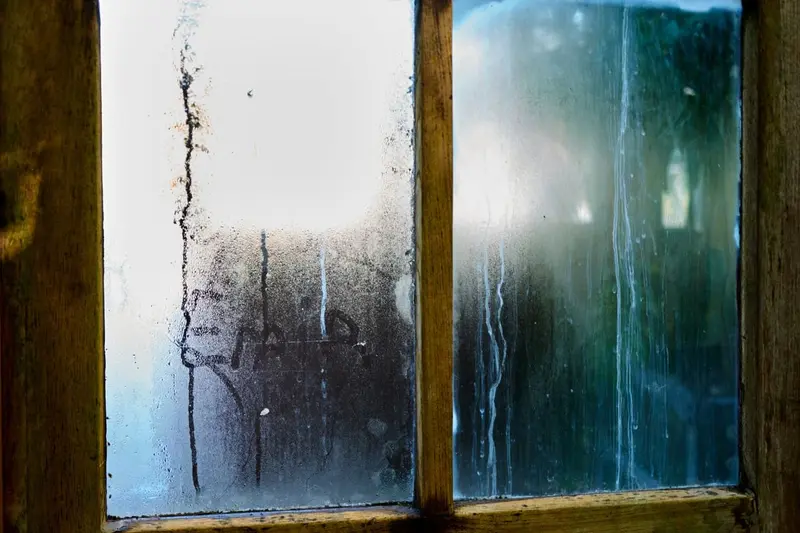
In cold weather, condensation on the inside of windows is the most visible sign of humid indoor air. Older single-pane glass and aluminum frames get the coldest and sweat first, but even double-pane windows fog when the house is humid enough. Everyday activity adds a surprising amount of water: showers, cooking, laundry, people breathing, houseplants and firewood stored indoors. Unvented gas logs and space heaters add moisture as they burn. The water runs down the glass onto the sill, where it soaks the wood, grows mold and stains the drywall below. If only one window sweats, check that window’s seal; if every window sweats, it is the air.
Summer: a clammy house
Triangle summers bring months of muggy outdoor air, and keeping that moisture out is mostly the air conditioner’s job. When the house feels cool but sticky, the system is cooling without drying. Common reasons:
- An oversized system that reaches the temperature quickly and shuts off before it has run long enough to remove moisture.
- The thermostat fan set to on instead of auto, which blows air across the wet coil between cycles and puts some of that water back into the house.
- Leaky ducts in the attic or crawl space pulling humid air into the system.
- Damp air from under the house rising through gaps in the floor.
- Rooms the AC barely reaches, such as finished lower levels and bonus rooms over garages.
Where high humidity grows mold
- Closets on exterior walls, especially behind clothes and boxes.
- Window sills, frames and the drywall below windows.
- The back of furniture and the wall behind it.
- Leather shoes, bags and jackets stored in closets.
- Finished lower levels, bonus rooms and other spaces that run cool and damp.
Measuring it
A digital hygrometer costs less than a tank of gas and turns guesswork into numbers. Put one in the main living area and another in the room that worries you, and watch them for a couple of weeks, including humid days and cold nights. Readings that stay above 60 percent mean the house is too damp. A large difference between rooms points to a local source, such as a bathroom without a working fan, rather than the whole house.
Bringing humidity down
- Exhaust moisture at the source: bathroom fans and the range hood ducted outdoors and actually used, and the dryer vented outside.
- Set the thermostat fan to auto, so the coil can drain between cycles.
- Have the AC checked, including its size, airflow and refrigerant charge; ask about dehumidifying settings or a whole-house dehumidifier.
- Seal and insulate ducts that run through the attic or crawl space.
- Run a portable dehumidifier in damp areas such as lower levels and closets, emptied or drained to a sink.
- Use humidifiers sparingly in winter, keeping indoor humidity low enough that windows stay mostly dry.
When it is more than humidity
If mold keeps coming back in one spot, if there are water stains, or if the smell persists after humidity is under control, the cause may be a leak rather than the air. A mold inspection with moisture readings tells the two apart. Mold that is already established on drywall, sills or closet walls is removed through mold remediation, and mold in the cooling system through mold in air ducts and HVAC.
High humidity in the house — common questions
What humidity should my house be?
EPA recommends keeping indoor relative humidity below 60 percent, ideally between 30 and 50 percent. A simple digital hygrometer shows where you are.
Why are my windows wet on the inside in the morning?
Indoor air is meeting glass that is colder than its dew point, usually on cold nights. Some condensation on older single-pane or aluminum windows is common; heavy condensation every day means indoor humidity is too high or the windows are failing.
Will a dehumidifier stop mold?
It helps when the cause is general humidity, especially in closets, lower levels and rooms the AC does not reach well. It does not fix leaks or remove mold that is already growing.
Why is my house humid even with the AC running?
An oversized system cools quickly and shuts off before removing much moisture, and a fan set to on instead of auto can put water from the coil back into the air. Leaky ducts and damp air from under the house add more.
Other signs of water damage and mold
Not sure where the water is coming from?
Call with what you are seeing and where, or send the details and we will get back to you.