Bathroom mold removal in Cary, NC
Some bathroom mold is surface mildew on grout and caulk. Some is behind the tile or under the vanity, fed by a leak. Telling the two apart decides whether it is a cleaning job or a remediation job.
- Surface mildew and hidden mold sorted out
- Moldy caulk cut out and replaced
- Leaks behind tile, valves and drains found
- Walls behind showers and vanities opened when needed
- Exhaust fan sized and vented outdoors
Covering Cary · Apex · Holly Springs · Morrisville · Raleigh
Request bathroom mold removal
Moisture mapped, not guessed
Moisture meters and thermal imaging trace how far the water traveled, so drying and tear-out stop where the damage stops.
Mold sealed off first
Moldy areas are closed in with plastic and kept under negative air with HEPA filters, so spores stay out of the rest of the house.
Paperwork insurers expect
Photos, daily moisture logs and an itemized estimate, so a claim has the documentation adjusters ask for.
Why choose us
Dry, clean and documented
A leak becomes a mold problem when the house is not dried in time. Quick extraction, measured drying and proper containment keep one bad day from turning into months of repairs.
- Fast response to active leaks
- Moisture readings every visit
- Containment and HEPA filtration
- Photos and logs for insurance
- Written, itemized estimates
- Local to Cary
Mold or mildew?
Bathrooms produce more water vapor than any other room, so nearly every bathroom grows something. The gray or black film on grout lines, the pink or black edge on the shower curtain and the speckles on the ceiling corner are usually surface mildew, a mold growing on soap scum and moisture without getting into the material underneath. It comes off with cleaning. The problem starts when growth is inside something: caulk, drywall, the subfloor or the wall cavity behind the tile.
Where bathroom mold grows
- Caulk at the tub and shower, where mold grows into and behind silicone and cannot be cleaned out.
- Grout, especially unsealed grout on shower floors and lower walls.
- The ceiling above the shower, where steam condenses on a cool surface every day.
- Under the vanity, from slow drips at the drain trap and supply lines.
- Around the toilet base, from a failed wax ring that leaks a little with every flush.
- Behind tile, where a cracked shower pan, failed waterproofing or a leaking valve soaks the wall from inside.
- Around the exhaust fan grille, when the fan pulls moist air but has nowhere to send it.
The exhaust fan is usually the fix
Most recurring bathroom ceiling mold comes back to ventilation. Code calls for at least 50 cubic feet per minute of exhaust in a bathroom with intermittent ventilation, and a common rule of thumb for sizing is one cubic foot per minute per square foot of floor in a typical bathroom. More important than the rating is where the air goes: the duct must run to the outdoors through a roof or wall cap, not into the attic, where it causes attic mold instead. Run the fan during the shower and for about 20 minutes after, or install a humidity-sensing switch that does it automatically.
Leaks behind the wall
Hidden leaks are what turn a cleaning job into remediation. The usual suspects are the shower valve and its connections, the drain under the tub, a shower pan that has cracked or was never properly sloped, and the toilet wax ring. Upstairs bathrooms give themselves away with stains or mold on the ceiling of the room below. A moisture meter on the wall outside the shower and a look through the plumbing access panel, if there is one, usually find it.
How bathroom mold is removed
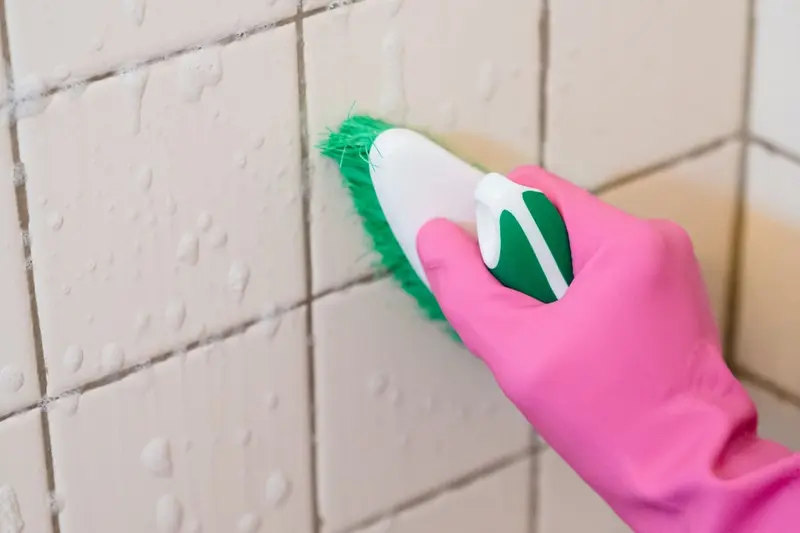
Surface mildew is cleaned: a bathroom cleaner or detergent, a stiff brush, rinsing and drying, with the room ventilated. Moldy silicone caulk is cut out completely, the joint cleaned and dried, and new caulk applied. Mold in drywall, behind tile or under a vanity is handled as mold remediation: the leak repaired, the area contained, the damaged drywall, backer board or subfloor removed, the framing cleaned and dried, and the area checked before it is rebuilt.
Rebuilding a shower so it stays dry
Many older Triangle bathrooms have tile set over moisture-resistant drywall, the green-faced board sold as greenboard, which resists humidity but is not waterproof and fails behind showers over time. When a shower wall is rebuilt, it should go back with cement backer board or a foam board system and a waterproofing membrane, with the shower pan tested for leaks before tile goes down. That is the difference between fixing the mold and resetting the clock.
Keeping bathroom mold from coming back
- Run the exhaust fan every time, and keep it running after the shower.
- Squeegee or towel off shower walls, and leave the door or curtain open to dry.
- Seal grout once a year and replace failing caulk at the first sign of mold underneath.
- Fix drips under the sink promptly, and look under the vanity now and then.
- Keep indoor humidity below 60 percent, ideally 30 to 50, as EPA recommends.
Bathroom mold removal — common questions
Why does mold keep coming back on my bathroom ceiling?
The ceiling stays damp after showers because the moist air is not being removed. Usually the fan is undersized, not ducted outdoors or not run long enough. Running it for about 20 minutes after every shower helps.
Can moldy grout be cleaned?
Surface mildew on sealed grout usually cleans up with a bathroom cleaner and a stiff brush. Staining deep in unsealed grout or under silicone caulk often means regrouting or cutting out and replacing the caulk.
How do I know if there is mold behind my shower tile?
Warning signs include loose or cracked tiles, grout that keeps cracking, a soft spot in the wall, a musty smell and stains on the wall or ceiling on the other side. A moisture meter and a look from an access panel or the room below confirm it.
What is the difference between mold and mildew?
Mildew is a common name for mold growing flat on a surface, often gray or white, which cleans off fairly easily. Mold that has grown into drywall, wood or caulk cannot be wiped away.
Problems this fixes
Often booked with this