Water damage and mold: how one leads to the other
Almost every mold problem in a house began as a water problem, and almost every water problem can become a mold problem. This guide explains how that happens, how fast, and how each fix fits together.
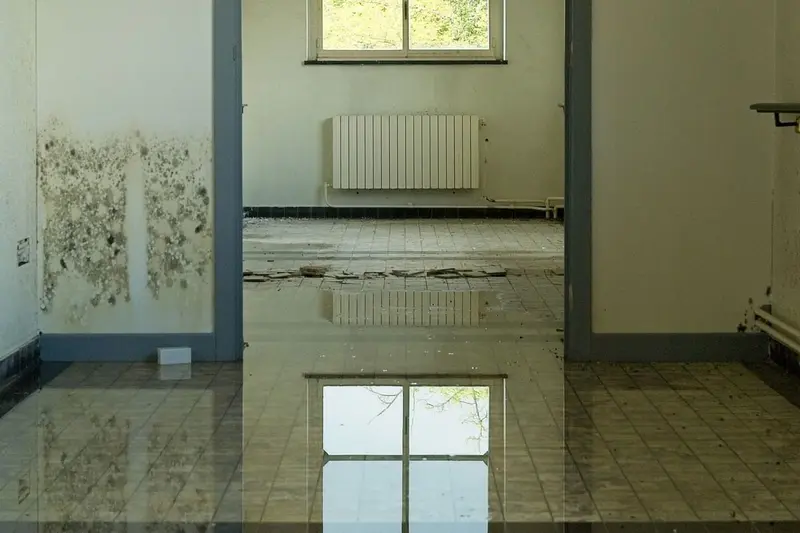
How a leak becomes a mold problem
Mold spores are part of ordinary air, indoors and out, in every house. They do nothing until they land somewhere damp with something to eat, and a house is full of food for mold: the paper on drywall, wood framing and subfloor, carpet backing, cardboard, and the dust that settles on everything. Water is the only missing ingredient. Add it, and the clock starts:
- The first hours: water spreads across floors, runs under baseboards and soaks into carpet pad. Drywall wicks it upward.
- Day one to two: wood and subfloor absorb water and start to swell. Mold can begin growing on wet materials within 24 to 48 hours.
- Days three to seven: a musty smell develops, and growth may become visible on drywall, baseboards and the back of carpet.
- Weeks to months: hidden growth spreads inside walls and under floors, wood weakens, and repairs grow from a patch to a remodel.
Getting from water to dry before that second day is what separates a drying job from a mold job.
The three things that decide the outcome
- How clean the water was. Clean supply water, gray water from appliances and black water from sewage or floods are handled very differently. The water damage categories guide explains how each one is handled.
- How long it sat. Speed matters more than anything else you control. The first 24 hours checklist covers what to do before help arrives.
- What got wet. Tile and concrete shrug off water; drywall, carpet pad, laminate and particleboard do not.
Stage 1: the water event
Most water damage in Triangle houses comes from a short list of sources, each with its own page:
- A ceiling leak or water stain from a bathroom, roof or attic unit above.
- A leaking water heater in a closet, garage or attic.
- A toilet overflow, which may be clean water or sewage.
- A washer, dishwasher or fridge leak running under floors and cabinets.
- AC leaking water from a clogged drain or overflowing pan.
- Burst pipe water damage, often after a hard freeze.
- Outside water that calls for flood damage cleanup, or a backup that calls for sewage cleanup.
Stage 2: getting the water out and the house dry
The goal is to remove liquid water fast and then dry everything that absorbed it. Emergency water removal pulls water out of floors and padding, which is far faster than evaporating it later. Structural drying then uses air movers and dehumidifiers, measured daily, until the materials match the dry parts of the house. Together they make up water damage restoration. Along the way, decisions get made about wet carpet and warped floors: dry them, or replace them.
Stage 3: when mold has already started
If water went unnoticed, sat for days or was never fully dried, mold may already be growing. The signs are a musty smell in the house, mold on walls, mold on the ceiling, and bubbling paint or soft drywall that hides water inside a wall. At this point the order of work changes: mold is contained and removed before drying equipment blows air around it.
- Mold inspection and testing finds hidden growth and the moisture feeding it.
- Mold remediation removes it under containment and confirms the result.
- Black mold removal covers dark growth on drywall and wood, which is handled the same way.
Mold without a leak
Not all indoor mold needs a pipe to break. Steady dampness from the air is enough. High humidity in the house causes condensation on windows and cold walls. Bathrooms without good exhaust grow mold on ceilings and caulk, covered under bathroom mold removal. Bath fans venting into the attic and leaky ceilings lead to attic mold removal. Air conditioning systems that hold water grow mold in their coils, pans and ducts, covered under mold in air ducts and HVAC.
Stage 4: repairs and keeping it dry
When the structure reads dry and any mold is gone, water damage repair puts back the drywall, flooring and cabinets. Then the house needs to stay dry:
- Know where your main water shutoff is, and make sure it turns.
- Replace rubber washer hoses and plastic ice maker lines with braided ones.
- Have the AC drain flushed each spring and test the float switch on attic units.
- Keep indoor humidity below 60 percent, ideally 30 to 50.
- Make sure bath fans and dryer vents exhaust outdoors.
- Put leak sensors under the water heater, dishwasher and washer.
Why the Triangle climate matters
Central North Carolina is humid for much of the year, and from late spring into fall the outdoor air carries enough moisture to slow drying and speed mold growth. Wet materials that might dry on their own in a desert stay wet here. Many houses also put water equipment overhead, with air handlers and sometimes water heaters in attics and laundry rooms on second floors, so a single failure soaks a ceiling. Tropical storms bring flash flooding along creeks, and the rare hard freeze, such as Christmas Eve 2022, finds pipes in exterior walls and crawl spaces.
Quick reference
| If you notice | It usually means | Start here |
|---|---|---|
| Water coming through a ceiling | A leak directly above | Ceiling leak |
| Soaked carpet | Water in the pad and subfloor | Wet carpet |
| A smell with no visible cause | Hidden growth somewhere damp | Musty smell |
| Spots on walls or ceilings | Humidity or a hidden leak | Mold on walls |
| Paint blisters, soft drywall | Water inside the wall | Bubbling paint |
| Foggy windows, clammy rooms | Indoor humidity too high | High humidity |
Insurance and costs
Insurers generally cover sudden, accidental water damage and limit or exclude the rest, including most mold. The insurance guide explains how. For budgeting, see the water damage restoration cost guide and the mold remediation cost guide. For small patches of mold you can handle safely, see cleaning up mold yourself.
Water damage and mold guide — common questions
How long after water damage does mold grow?
Mold can start within 24 to 48 hours on wet drywall, wood, carpet and other materials it can feed on, and visible growth often appears within one to two weeks if they stay wet.
Can water damage be dried without mold?
Yes, if extraction and drying start quickly and the materials are measured until they are dry. Most clean-water leaks handled within a day or two dry out with no mold at all.
Is all mold after water damage dangerous?
Any mold can cause allergy and asthma symptoms in sensitive people, and its color or species does not change how it should be handled. It should be removed and the moisture fixed.
Who should I call first, a plumber or a restoration company?
Stop the water first, then call both. The plumber fixes the source and the restoration crew extracts and dries. Delaying drying while waiting for the plumbing repair costs more than it saves.
More water damage and mold guides
Want someone to take a look?
Call and describe what happened or what you are seeing, or send the details and we will follow up.