Mold in air ducts and HVAC systems in Cary, NC
Spots around a ceiling vent, a musty smell when the AC starts, mold on the air handler: a heating and cooling system that grows mold spreads it through the house. The fix is finding where moisture collects in the system and cleaning or replacing what grew.
- Air handler, coil, drain pan and ducts inspected
- Condensation at vents told apart from mold growth
- Moldy flex duct and duct board replaced
- Metal ducts cleaned under negative pressure
- Humidity and drainage problems corrected
Covering Cary · Apex · Holly Springs · Morrisville · Raleigh
Request mold in air ducts and HVAC
Moisture mapped, not guessed
Moisture meters and thermal imaging trace how far the water traveled, so drying and tear-out stop where the damage stops.
Mold sealed off first
Moldy areas are closed in with plastic and kept under negative air with HEPA filters, so spores stay out of the rest of the house.
Paperwork insurers expect
Photos, daily moisture logs and an itemized estimate, so a claim has the documentation adjusters ask for.
Why choose us
Dry, clean and documented
A leak becomes a mold problem when the house is not dried in time. Quick extraction, measured drying and proper containment keep one bad day from turning into months of repairs.
- Fast response to active leaks
- Moisture readings every visit
- Containment and HEPA filtration
- Photos and logs for insurance
- Written, itemized estimates
- Local to Cary
How mold grows inside an HVAC system
An air conditioner dehumidifies as it cools. Warm, humid air passes over the cold evaporator coil, water condenses on it and drips into a drain pan, and a drain line carries it away. Add the dust that collects on the coil and in the ducts, and the system has everything mold needs: moisture, food and darkness. As long as the water drains and the surfaces dry between cycles, it stays in check. Trouble starts when water sits.
Signs of mold in the system
- A musty or dirty-sock smell when the system starts, fading after a few minutes.
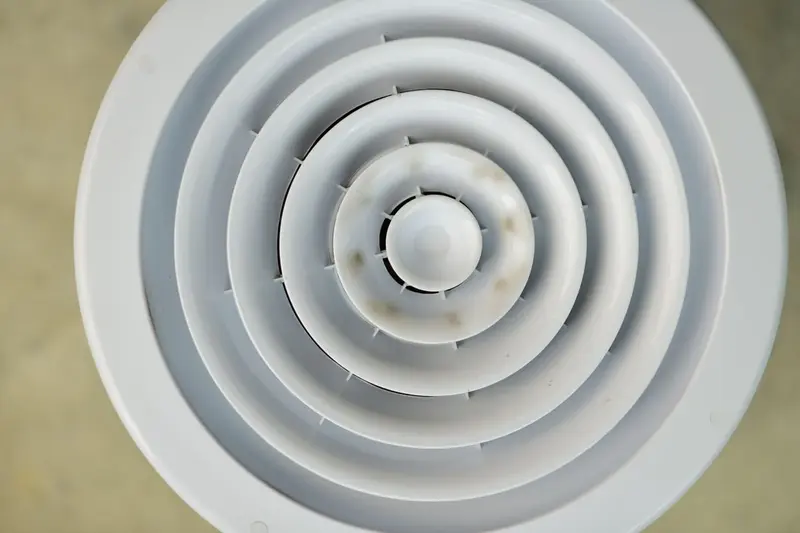
- Dark spots on or around supply registers and ceiling diffusers.
- Slime or standing water in the drain pan, or water on the floor around the air handler.
- Visible growth on the blower, the coil or the inside of the cabinet.
- Allergy symptoms that flare when the system runs.
Mold around vents or mold inside the ducts?
Dark marks around a register are not always growth inside the ductwork. Cold supply air hitting warm, humid room air can make the grille and the ceiling around it sweat, and mold grows on that surface moisture. Dust also deposits in a ring where air leaves the diffuser, and a duct boot that leaks pulls dusty attic air in around the vent. Each has a different fix, so a close look, and a swab if needed, comes before any cleaning.
Oversized systems and high indoor humidity
A system that is too big for the house cools the air quickly and shuts off before it has run long enough to remove much moisture. The house feels cool but clammy, humidity creeps up, and condensation shows up at vents and on cold surfaces. In a Triangle summer this is a common root cause of mold at registers and in closets. Indoor humidity should stay below 60 percent, ideally between 30 and 50 percent as EPA recommends; an HVAC contractor can adjust fan settings, add dehumidification or resize equipment at replacement time. See high humidity in the house for more.
How HVAC mold is removed
- Inspect the whole system: air handler, coil, blower, drain pan and line, the plenums and a sample of duct runs.
- Shut the system down and seal the registers in work areas so spores are not pushed through the house.
- Clean the equipment. The coil, blower and cabinet are cleaned by a licensed HVAC contractor, and the drain pan and line cleared and fixed so they drain properly.
- Replace what cannot be cleaned. Flex duct and fiberglass duct board with mold in the insulation are replaced, in line with EPA guidance.
- Clean sheet metal ducts with agitation tools while a HEPA-filtered vacuum unit holds the system under negative pressure, following industry standards for duct cleaning.
- Seal and insulate leaky duct connections and boots, then clean or replace the registers.
Who does what
Repairs to heating and cooling equipment in North Carolina require a contractor licensed by the state board that licenses HVAC contractors. Mold in the surrounding building, such as drywall around a leaking air handler closet or a ceiling under an overflowing pan, is mold remediation. On many jobs the two trades work together, and the remediation crew handles containment while the HVAC contractor works on the equipment.
Keeping it from coming back
- Change filters on schedule, using the filter rating the system is designed for.
- Keep the condensate drain clear; many contractors flush it during seasonal maintenance.
- Make sure attic air handlers have a secondary pan or a float switch that shuts the system off before the pan overflows.
- Keep humidity in check, and seal and insulate ducts that run through hot attics and crawl spaces.
If the water from a clogged drain has already reached the ceiling, see AC leaking water.
Mold in air ducts and HVAC — common questions
Is the black stuff around my AC vents mold?
Sometimes. Often it is dust that sticks where cold air meets warm, damp room air, or condensation that has started to grow mold on the grille. A swab test or a close inspection tells them apart.
Can moldy ductwork be cleaned?
Sheet metal ducts can be cleaned. Insulated flex duct and duct board with mold in the insulation cannot be cleaned reliably and are replaced, which matches EPA guidance.
Should I run the AC if there is mold in the system?
If mold is confirmed in the ducts or air handler, running the system can spread spores. Ask the remediation crew or your HVAC contractor before using it; in summer, temporary cooling may be needed.
Will an ozone generator or UV light fix duct mold?
Not on their own. EPA has found ozone generators ineffective at safe concentrations and warns that ozone irritates the lungs. UV lights can help keep a coil clean but do not remove existing growth from ducts.
Problems this fixes
Often booked with this