Does homeowners insurance cover water damage and mold?
Most homeowners policies cover water damage that is sudden and accidental, and most exclude damage that was gradual, came from outside or came up from a sewer. Mold coverage is usually limited. Here is how insurers draw those lines, in plain terms.
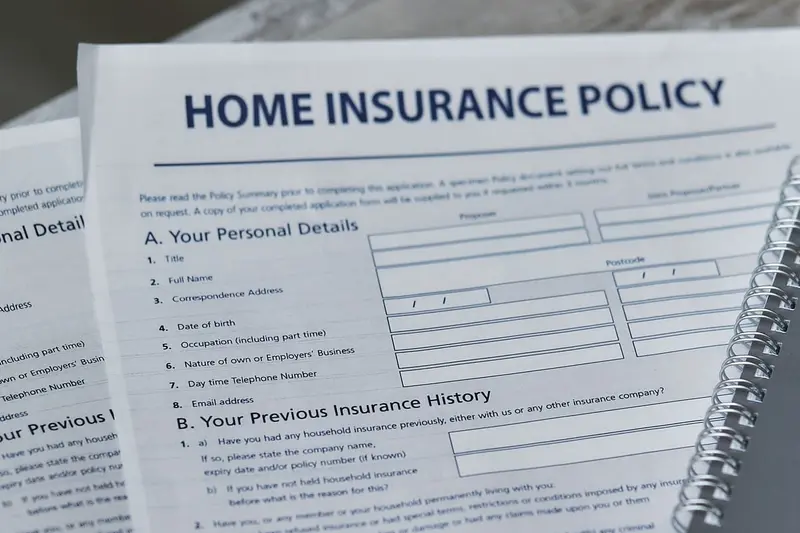
Every policy is different, and this guide is general information rather than advice about yours. Your declarations page and policy wording, and your agent, have the final word.
The basic rule: sudden and accidental
The standard homeowners policy covers water damage when the water escaped suddenly and accidentally from a plumbing, heating, air conditioning or household appliance system. A pipe that bursts, a washer hose that splits and a water heater that fails are the textbook examples. What insurers do not want to cover is damage that built up slowly, that came from outside, or that resulted from a lack of maintenance. Nearly every coverage question comes back to which side of that line the water falls on.
What is usually covered
- Burst and frozen pipes, as long as the house was heated or the water was shut off and drained.
- Appliance and water heater failures: the damage the water caused, though not the failed appliance itself.
- Sudden AC overflows and other system leaks.
- Tear-out to reach the leak: most policies pay to open and replace the wall or floor needed to repair the system, though not to repair the pipe.
- Rain entering through storm damage, such as a roof opened by a fallen tree or wind.
- Water used to put out a fire.
- Additional living expenses when the house cannot be lived in during repairs, within the policy’s loss of use limit.
What is usually excluded
- Flood and surface water: rising creeks, storm runoff and water flowing into the house from outside. That requires flood insurance.
- Gradual leaks and seepage: a drip under the sink that ran for months, a shower that leaked into the wall over years.
- Wear, tear and maintenance: a roof that leaks because it is old, caulk that failed, a drain line never cleaned.
- Sewer and drain backups, unless the policy has a water backup endorsement.
- Groundwater seeping through foundations.
- Freezing in a house left unheated without the water shut off and drained.
- Mold beyond what the policy specifically allows.
How mold coverage works
Many policies exclude mold, often worded as fungi, wet or dry rot, or bacteria, and then give a limited amount of coverage back when the mold results from a covered water event. A burst pipe that caused mold behind the drywall may be covered up to that limit. Mold from long-term humidity, a slow leak or a problem the homeowner knew about is usually not. The limit is often a few thousand to ten thousand dollars, and some policies offer more for an added premium. Check the mold or fungi section of your policy before you need it, and read the mold remediation cost guide to see how far that limit goes.
Flood insurance
Flood coverage is a separate policy, available through the National Flood Insurance Program and from private insurers. For a home, NFIP coverage tops out at $250,000 for the building and $100,000 for contents, and policies generally take 30 days to take effect, so it cannot be bought as a storm approaches. FEMA flood maps show the areas at highest risk, but plenty of flood claims come from outside those zones. Flood policies have their own rules on what is covered in crawl spaces and basements, so read those sections closely.
Sewer and drain backup coverage
Water that backs up through a toilet, shower or floor drain from the sewer line is excluded from most standard policies. A water backup endorsement adds it back, usually up to a set limit, for a modest premium. If your house has an older clay or cast iron sewer line, large trees in the yard or a finished space below the street, it is worth asking about. Sewage cleanup explains what a backup involves.
Condos and townhomes
In attached housing, two policies are usually involved: the association’s master policy, which covers the building structure to a degree set by the governing documents, and the owner’s own condo policy, often called an HO-6, which covers the interior finishes, belongings and liability. When water comes from the unit above, the source, the documents and both policies all matter. Report it to the association quickly, and ask how its deductible is handled; some associations pass it to the unit owner responsible.
Documenting a claim
- Photograph and video the damage and the source before anything is moved or removed.
- Keep the failed part: the split hose, the cracked supply line, the corroded fitting.
- Keep a sample of each removed material, such as a square of carpet and pad, until the adjuster has seen it.
- Ask the restoration company for its moisture readings, drying logs and photos.
- Save receipts for emergency purchases and temporary housing.
- Write down the date and time the water was found and when it was stopped.
Your duty to prevent further damage
Policies generally require you to take reasonable steps to protect the property from further damage after a loss, which is why drying should start right away rather than after an adjuster visits. Stopping the water, extracting it and drying the structure are the kind of steps insurers expect. Damage that grows because nothing was done, such as mold that develops while wet drywall sits for two weeks, may not be covered.
Working with the adjuster
Most insurers and restoration companies estimate water losses line by line in the same estimating software, so differences between their numbers can usually be traced to specific items. Ask for the adjuster’s estimate in writing and go through it with your contractor. If you reach an impasse, North Carolina licenses public adjusters, who represent policyholders for a fee, and the North Carolina Department of Insurance has a consumer services division that handles questions and complaints about claims. The water damage restoration cost guide explains how those estimates are built.
Does insurance cover water damage? — common questions
Is a slow leak covered by homeowners insurance?
Usually not. Most policies exclude damage from leaks or seepage that continued over weeks or months, treating it as a maintenance issue. A leak hidden inside a wall that you could not have known about is sometimes treated differently, so read your policy and ask.
Does homeowners insurance cover mold?
Often only when the mold results from a covered water event, and frequently only up to a set limit. Mold from long-term humidity or neglected leaks is typically excluded.
Do I need flood insurance in Cary?
Homeowners policies exclude flood, so any house that could take on water from outside benefits from it. Houses near creeks or in mapped flood zones are the obvious cases, but flooding also happens outside mapped zones.
Will filing a water damage claim raise my premium?
It can, since insurers look at claim history and water claims in particular. For small losses close to the deductible, paying out of pocket can make sense; for larger ones, the claim is what the policy is for.
More water damage and mold guides
Want someone to take a look?
Call and describe what happened or what you are seeing, or send the details and we will follow up.