Mold remediation in Cary, NC
Mold removal that lasts starts with the water behind it. The area is sealed off, the growth and anything too far gone are removed under HEPA filtration, and the result is checked before the walls are closed.
- Moisture source found and fixed first
- Containment with plastic sheeting and negative air
- HEPA air scrubbers and HEPA vacuuming
- Moldy drywall, insulation and carpet removed and bagged
- Visual and moisture clearance, with testing when wanted
Covering Cary · Apex · Holly Springs · Morrisville · Raleigh
Request mold remediation
Moisture mapped, not guessed
Moisture meters and thermal imaging trace how far the water traveled, so drying and tear-out stop where the damage stops.
Mold sealed off first
Moldy areas are closed in with plastic and kept under negative air with HEPA filters, so spores stay out of the rest of the house.
Paperwork insurers expect
Photos, daily moisture logs and an itemized estimate, so a claim has the documentation adjusters ask for.
Why choose us
Dry, clean and documented
A leak becomes a mold problem when the house is not dried in time. Quick extraction, measured drying and proper containment keep one bad day from turning into months of repairs.
- Fast response to active leaks
- Moisture readings every visit
- Containment and HEPA filtration
- Photos and logs for insurance
- Written, itemized estimates
- Local to Cary
Remediation, not just removal
Wiping off visible mold is removal. Remediation is the whole job: stopping the moisture that fed the mold, keeping spores from spreading while the work is done, removing the growth along with materials too contaminated to clean, cleaning the surrounding area and proving the result. The industry standard, the IICRC S520, describes the goal as returning the space to normal background levels of mold, the kind found in any healthy house, rather than an impossible zero.
Step 1: find and fix the moisture
Mold indoors is always a water problem first. The source might be a slow drain leak under a vanity, a roof flashing failure, condensation on a cold wall, or humidity left behind after an earlier leak that was never dried properly. If it is not fixed, the mold grows back no matter how well it was removed. Plumbing and roofing repairs happen before or alongside remediation, and wet materials are dried as part of the job.
Step 2: measure the extent
What you can see is rarely all there is. Mold on the face of drywall is usually worse on the back side, inside the cavity. Moisture meters show how far the dampness reaches, and a small inspection opening or a borescope camera shows what is inside the wall. EPA guidance sorts jobs by size: under about 10 square feet is small, 10 to 100 square feet is medium, and larger areas need full containment and trained crews. The size decides the setup.
Step 3: containment and negative air
For anything beyond a small patch, the work area is sealed off before removal begins:
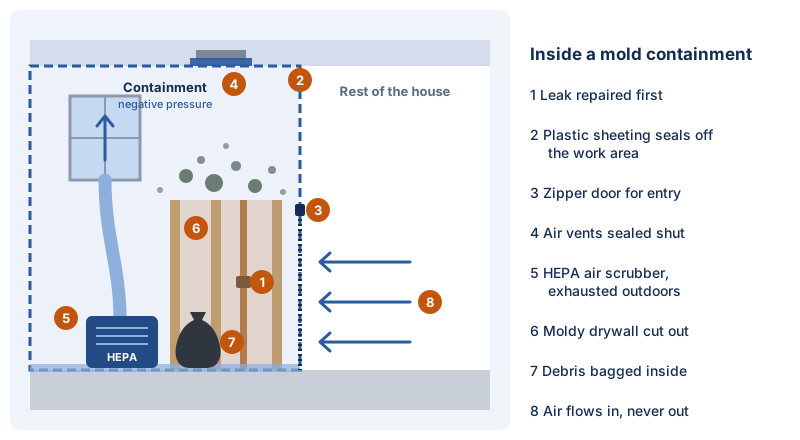
Plastic sheeting walls off the area, with a zipper door for entry. Heating and cooling vents in the area are sealed and the system is turned off so it cannot carry spores around the house. A HEPA-filtered air scrubber pulls air out of the containment and exhausts it outdoors, which keeps the work area at slightly lower pressure than the rest of the house. Any small gap then leaks air in, not spores out.
Step 4: removing the mold
Porous materials with mold growth, such as drywall, insulation, carpet and ceiling tiles, are cut out, bagged inside the containment and carried out sealed. Drywall is removed with a margin past the last visible growth. Wood framing and other solid materials are cleaned rather than replaced: HEPA vacuuming, wire brushing or sanding where growth has rooted into the surface, then damp wiping. An antimicrobial may be applied once the surfaces are clean, and a mold-resistant coating is sometimes added to cleaned framing, but neither substitutes for removal.
Step 5: cleaning the whole work area
Mold removal releases spores and dust, so the job is not finished when the moldy material is gone. Every surface inside the containment, including the framing, floor, plastic and tools, is HEPA vacuumed and wiped down, often twice. Contents that were in the area are cleaned or, if porous and contaminated, discarded.
Step 6: clearance
Before the containment comes down, the area should pass three checks: no visible mold or debris, materials dry by moisture meter, and air that the HEPA scrubbers have cleaned for long enough. Many homeowners also want independent post-remediation verification, often with air samples, from an assessor who did not do the work. Mold inspection and testing explains that step.
Choosing a mold remediation company
North Carolina does not have a mold-specific license, so the quality of the work depends on the company. Ask about IICRC certification in applied microbial remediation, liability insurance that covers mold, and how they handle containment. Be cautious with anyone who quotes a large job without measuring moisture, wants to spray or fog instead of removing growth, or insists on running both the testing and the removal for a large fee. For pricing, see the mold remediation cost guide; for small patches you can safely clean yourself, see cleaning up mold yourself.
Mold remediation — common questions
How long does mold remediation take?
Small, contained jobs often take a day or two. A room that needs drywall removed usually takes two to five days, plus drying time if the area is still wet. Rebuilding comes after clearance.
Can I stay home during mold remediation?
Usually, yes. Containment and negative air are designed to keep spores inside the work area. People with asthma, allergies or weakened immune systems may want to be away while the mold is being removed.
Does mold come back after remediation?
Not if the moisture problem was fixed and the area stays dry. Mold that returns almost always means water is still getting in somewhere, or indoor humidity is still too high.
Is spraying or fogging enough?
No. Sprays and foggers alone leave the mold in place, and EPA guidance notes that dead mold can still cause allergic reactions. Industry standards call for physical removal.
Do I need a mold test before remediation?
Not when the mold is visible and its extent is clear. Testing helps when mold is suspected but hidden, or to confirm the work afterward.
Problems this fixes
Often booked with this