Water leaking through the ceiling: what to do first
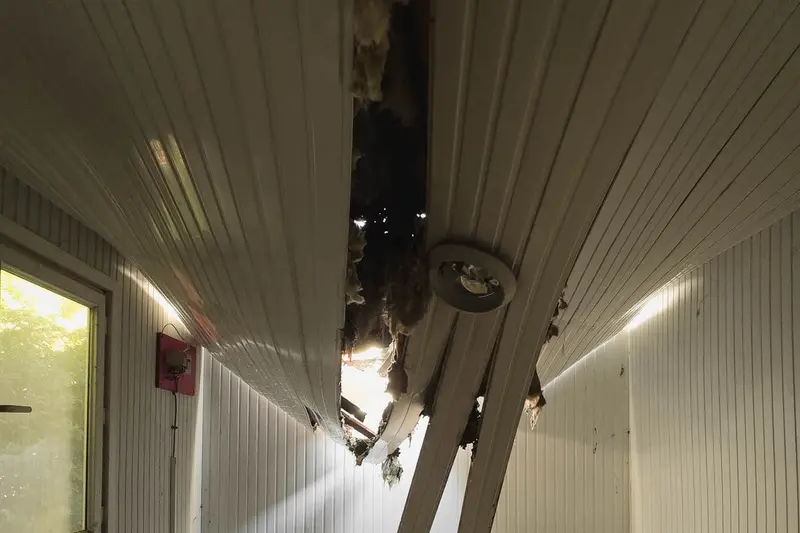
A drip from the ceiling, a brown ring spreading across the drywall or a sagging bulge over the bed: water overhead needs attention the same day, before the ceiling gives way or mold starts above it.
What you may notice
- Water dripping from the ceiling, a light fixture or a vent
- A yellow or brown ring that grows after rain or showers
- A sagging or bulging patch of ceiling drywall
- Peeling paint or cracked tape seams overhead
- A musty smell in the room or the closet above
Tell us what you are seeing
Moisture mapped, not guessed
Moisture meters and thermal imaging trace how far the water traveled, so drying and tear-out stop where the damage stops.
Mold sealed off first
Moldy areas are closed in with plastic and kept under negative air with HEPA filters, so spores stay out of the rest of the house.
Paperwork insurers expect
Photos, daily moisture logs and an itemized estimate, so a claim has the documentation adjusters ask for.
Act on an active leak now
- Stop the water if you can. For plumbing, close the main shutoff or the valve on the fixture above. For an upstairs toilet, turn the valve behind it. If the AC is running and the leak is under the attic air handler, turn the system off at the thermostat.
- Make the room safe. Turn off the breaker for the room if water is near a light fixture or ceiling fan, and keep everyone out from under a bulging ceiling.
- Contain the water. Buckets, towels and plastic sheeting over furniture and electronics that cannot be moved.
- Relieve a water-filled bulge with a small hole at its lowest point, standing to the side, so it drains into a bucket instead of collapsing.
- Photograph everything, including the source above if you can safely see it.
Where ceiling water comes from
Water in a ceiling almost always comes from directly above, though it may travel along a joist or pipe before it shows. The common sources in Triangle houses are:
- An upstairs bathroom: a failed toilet wax ring, a leaking tub drain, a cracked shower pan or a supply line under the vanity.
- The attic air handler: a clogged condensate drain that overflows the pan in summer.
- A water heater installed in the attic, where the tank or its fittings fail.
- The roof: cracked rubber boots around plumbing vents, flashing at chimneys and walls, skylights and storm damage.
- Supply pipes running through the ceiling between floors, including lines that froze in an outside wall.
- Condensation on uninsulated ducts or pipes in the attic during humid weather.
What the timing tells you
When the stain appears is often the best clue. A stain that shows up or spreads after rain points to the roof or flashing. One that appears after someone showers or flushes upstairs points to that bathroom. A summer-only stain that grows on hot afternoons is usually the air conditioner. A stain that keeps growing no matter what, or a dripping ceiling with no rain and no one upstairs, suggests a pressurized supply line, which leaks around the clock and needs the water shut off now.
Concentric rings, one inside another, mean the ceiling has been wet and dried more than once. That pattern deserves a closer look, because repeated wetting is exactly how mold gets established above a ceiling.
Can the ceiling be saved?
Ceiling drywall that got wet briefly with clean water, is still firm and flat, and is dried quickly can often stay. Drywall that sags, has softened, has a seam that let go or got wet from a toilet or sewer line comes down. So does any ceiling where the paper facing has started to separate. Above the drywall, blown insulation soaks up water like a sponge and packs down into a heavy wet mat, so wet insulation is usually removed rather than dried. The ceiling joists are checked for moisture before anything is closed up.
Drying above the ceiling
Drying a ceiling means drying both sides of it. From the attic, wet insulation is pulled back or removed so air can reach the top of the drywall. Between floors, a section of ceiling is often opened so the joist bay can be dried, because water trapped on top of drywall under a bathroom has nowhere to go. Air movers and dehumidifiers run until the drywall and framing read dry, as described under structural drying.
Mold above the ceiling
A leak that went unnoticed for days, or one that has wet the same spot over several months, can leave mold on the back of the drywall, on the insulation or on the subfloor above. Any growth found while the ceiling is open is removed before it is closed, and mold on the ceiling covers the signs that it is already there.
Repairing the ceiling
Once the leak is fixed and the readings say dry, new drywall goes up, the seams are taped and finished, and the texture is matched to the rest of the ceiling. Stains on drywall that was dried in place get a stain-blocking primer before paint. Water damage repair explains how the finish is matched so the patch disappears. If the leak came from a frozen or failed pipe, start with burst pipe water damage.
Ceiling leak or water stain — common questions
Should I poke a hole in a sagging ceiling?
If the bulge is full of water and you can stand to one side, a small hole at the lowest point with a bucket underneath drains it in a controlled way and can keep the whole panel from falling. Turn off power to the room first, and never stand directly under it.
Can a water-stained ceiling be painted over?
Only after the leak is fixed and the drywall is confirmed dry and firm. The stain needs a stain-blocking primer first, or it bleeds through the new paint.
Is a ceiling water stain an emergency?
An active drip or a sagging ceiling is. An old, dry stain that has not grown is not, but find out whether the source was fixed: a stain that grows after rain or showers means the leak is still active.
Will insurance pay for a ceiling leak?
Sudden damage from a burst pipe or failed appliance is usually covered. Roof leaks from wear and age, and slow plumbing leaks, often are not. The cause matters, so photograph the source as well as the damage.
Other signs of water damage and mold
Leak fixed and dried out, but the stain still shows? Ceiling and wall painting by Apex Handyman
Not sure where the water is coming from?
Call with what you are seeing and where, or send the details and we will get back to you.