Mold on the ceiling: what causes it and how to fix it
Mold on a ceiling means water is reaching it from one of two directions: moist air from the room below, or a leak from the attic or floor above. The pattern and location usually tell you which.
What you may notice
- Dark spots in ceiling corners or above the shower
- A gray or black patch around a stain or water ring
- Mold along the edge where the ceiling meets an exterior wall
- Spots around the bath fan or a ceiling vent
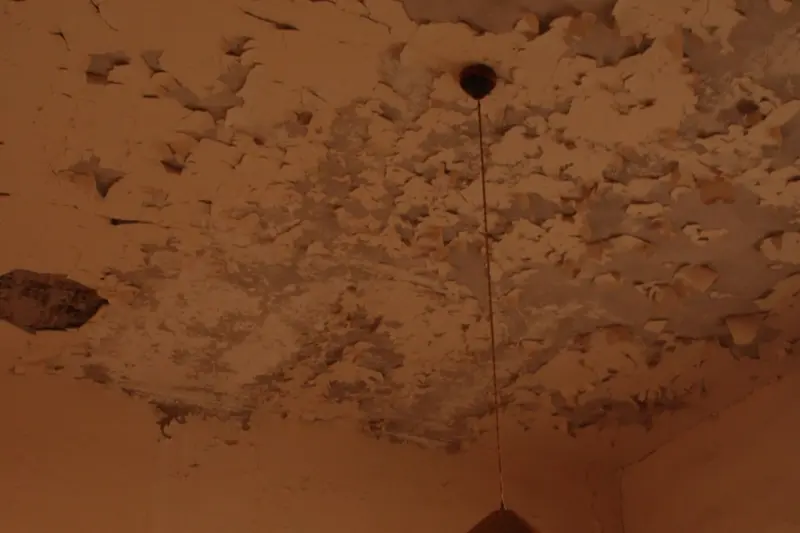
- Peeling paint or sagging drywall overhead
Tell us what you are seeing
Moisture mapped, not guessed
Moisture meters and thermal imaging trace how far the water traveled, so drying and tear-out stop where the damage stops.
Mold sealed off first
Moldy areas are closed in with plastic and kept under negative air with HEPA filters, so spores stay out of the rest of the house.
Paperwork insurers expect
Photos, daily moisture logs and an itemized estimate, so a claim has the documentation adjusters ask for.
From below or from above?
Ceiling mold has two possible water sources, and they look different:
- From the room below: humid air condensing on the ceiling. The growth is speckled and spread out, in corners, above showers, along outside walls and around vents. There is usually no water stain.
- From above: a roof leak, an overflowing attic air handler, a bathroom or laundry room on the floor above, or a pipe in the ceiling. The growth centers on a water stain or ring, and the drywall may be discolored, soft or sagging.
The first is a humidity and ventilation problem. The second is a leak, and there is usually more mold on the hidden side of the drywall than on the side you see.
Bathroom ceilings
The ceiling above a shower is the most common place for ceiling mold in any house. Steam rises, condenses on the cooler ceiling and, without enough exhaust, the surface stays damp long after the shower. Small spots clean off, but they return until the ventilation is fixed: a fan big enough for the room, ducted outdoors rather than into the attic, and run for about 20 minutes after each shower. Bathroom mold removal covers the details.
Cold corners and thin insulation
Mold in a band along the top of an exterior wall, or in the corners of upstairs rooms, usually marks a cold spot. At the eaves, attic insulation is often thin, compressed or blown back by wind coming through the soffit vents, so the ceiling there gets cold in winter. Indoor moisture condenses on it and mold follows. Sometimes faint gray stripes appear across a ceiling at regular spacing; those often line up with the framing above, where the ceiling is slightly colder and dust or mold collects. Adding insulation at the eaves, with baffles to keep the soffit vents clear, and keeping indoor humidity in check solves it.
Leaks from the attic or the floor above
A ring-shaped stain with mold around it means water came through. In summer, the usual source in Triangle houses is an attic air handler whose drain clogged and pan overflowed. After storms, it is the roof, often a cracked rubber boot around a plumbing vent or failed flashing. Under an upstairs bathroom, it is a toilet seal, a tub drain or a shower pan. The ceiling leak page covers how to read the timing, and AC leaking water covers the air conditioning side.
Mold above the drywall
When a ceiling has been wet from above, the growth you can see is a fraction of what is there. The back of the drywall, the insulation on top of it and, in an attic, the framing and roof sheathing may all be affected. Before deciding on a fix, someone needs to look from above: in the attic, or by opening a small section of ceiling between floors. If the mold extends onto the roof deck, attic mold removal covers that part.
Removing ceiling mold
A few spots of surface mold from steam can be cleaned with detergent and water, wearing gloves, goggles and an N95 respirator, then dried. Mold on drywall that got wet from above is cut out, because it has grown into the paper and onto the back of the board. Overhead removal is messy, so the room is contained with plastic, the floor and contents protected, and HEPA filtration run while the ceiling comes down. Wet or moldy insulation above it is removed, the framing is cleaned and dried, and the area is checked before new drywall goes up. Mold remediation explains the full process.
Keeping the ceiling clean
- Run bathroom fans during and after showers, and confirm they vent outdoors.
- Keep indoor humidity below about 60 percent.
- Top up attic insulation at the eaves, with baffles so the soffit vents still breathe.
- Have the AC drain flushed each spring, and test the float switch on an attic unit.
- Repaint a cleaned bathroom ceiling with a mildew-resistant bathroom paint over a stain-blocking primer.
Mold on the ceiling — common questions
Why is mold growing on my bathroom ceiling?
Shower steam condenses on the ceiling and stays there when the exhaust fan is too weak, not vented outdoors or not run long enough. Clean the spots, then fix the ventilation, or it returns.
Is mold on the ceiling dangerous?
Any indoor mold can trigger allergy and asthma symptoms. A few spots from steam are a cleaning job; a patch around a leak can mean much more growth above the drywall, which should be removed properly.
Why is there mold where my ceiling meets the outside wall?
Those corners are often the coldest surfaces in the room, especially where attic insulation is thin or pulled back at the eaves. Moist indoor air condenses there in winter. Adding insulation and lowering humidity fixes it.
Can I paint over ceiling mold?
Not until the mold is removed, the cause is fixed and the drywall is dry. Then use a stain-blocking primer before the ceiling paint.
Other signs of water damage and mold
Not sure where the water is coming from?
Call with what you are seeing and where, or send the details and we will get back to you.